
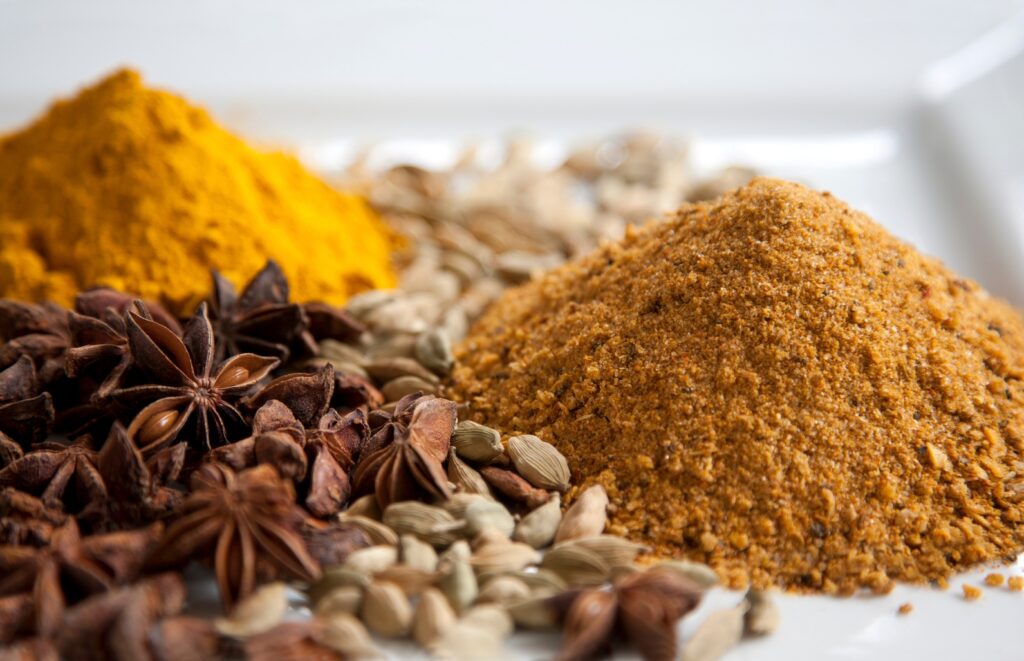
India has long been recognized as the spice capital of the world, accounting for over 40% of global spice trade. In 2023–24, India exported spices worth more than USD 4 billion, making them one of the strongest pillars of its agri-export portfolio. With their distinct aromas, medicinal values, and culinary versatility, Indian spices remain indispensable to kitchens and industries worldwide. For international buyers, understanding which spices dominate trade helps in making informed sourcing decisions.
Cardamom is often referred to as the “Queen of Spices. ” India, particularly Kerala, is one of the largest producers of high-quality small cardamom, valued for its rich aroma and therapeutic benefits.
Black Pepper, once known as “black gold, ” continues to lead the spice category in global trade. India exports thousands of tons each year, especially from Kerala and Karnataka, with demand strongest in North America and Europe. Its use spans cuisines, pharmaceuticals, and even perfumery.
Clove holds a special position due to its pungent flavor and medicinal applications. Grown primarily in Tamil Nadu and Kerala, Indian clove exports are in steady demand from Southeast Asia, the Gulf, and Western countries for both culinary and herbal uses.
Cinnamon, sourced mainly from South India, has gained traction in recent years as global consumers prefer natural sweeteners and healthier spice options. It is widely used in baking, beverages, and nutraceutical products.
Finally,Turmeric is often considered India’s golden gift to the world. Accounting for more than 75% of global turmeric production, India’s exports continue to expand to the U.S., EU, and Asian markets, supported by growing awareness of its medicinal and anti-inflammatory properties
For global buyers, these five spices represent the core of India’s export basket. They combine tradition, quality, and consistent supply, making them reliable choices for international trade. As demand for natural and health-centric foods grows, these spices are likely to remain at the center of global import requirements for years to come.
