
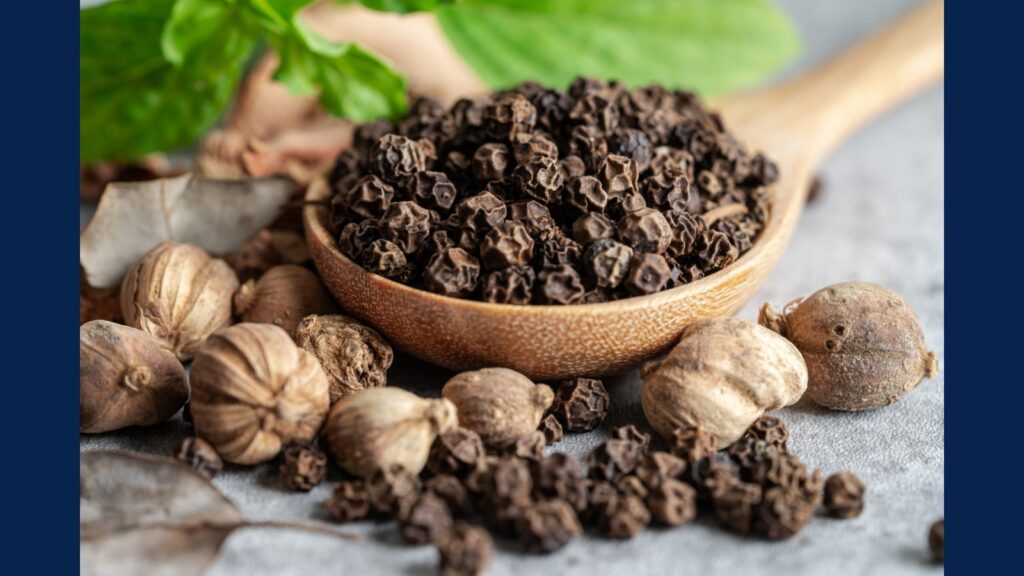
Black pepper has long held its position as one of the world’s most traded spices, prized both for its flavor and its economic significance. In 2022– 2024, Vietnam led global exports, accounting for roughly 43% of all black pepper export value, followed by Indonesia and Brazil. India, while not the top exporter by volume, still earned about USD 114.1 million in black pepper export value in 2024— representing around 4.2% of global exports.
India both imports and exports black pepper; domestic consumption and industrial demand (for spice blends, food processing) mean that export earnings are often paired with rising import volumes to satisfy local demand and quality or grade requirements. Studies reveal that adding black pepper to one’s diet improves absorption of certain micronutrients and may reduce inflammation. These properties give black pepper a dual role—not just as a flavoring agent but also as a functional ingredient in wellness, nutraceuticals, and even cosmetics.
Back pepper’s reign in global trade is maintained by a combination of widespread demand, both in foods and wellness sectors, dual importexport dynamics in major producing countries, and its long heritage. As markets continue to favor natural, functional, and sustainably produced food ingredients, black pepper’s importance only strengthens.
